≡ Menu

jaced.com

jace

The left lung is smaller than the right lung to make room for the heart.

A cough releases an explosive charge of air that moves at speeds up to 60 mph.

The most common blood type in the world is Type O. The rarest, Type A-H, has been found in less than a dozen people since the type was discovered. [click to continue…]

A perfect game in baseball is one in which the same player pitches the entire game without allowing any player of the opposing team to reach first base by any means.

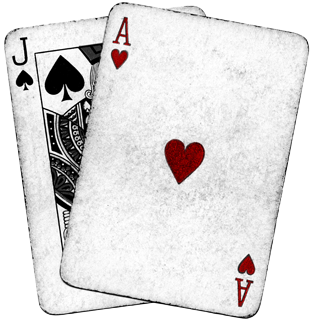
There are 2,598,960 five-card hands possible in a 52-card deck of cards.

Golfers use an estimated $800 million worth of golf balls annually. [click to continue…]

jace

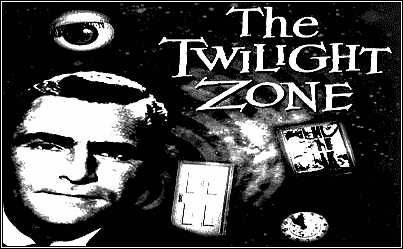
Season 1

1. Where Is Everybody? (10/2/1959)
2. One For The Angels (10/9/1959)
3. Mr. Denton On Doomsday (10/16/59) – Starring Martin Landau & Doug McClure. A worn out
gunslinger regains his gun-fighting abilities after taking a majic potion.
4. The Sixteen-Millimeter Shrine (10/23/59) – Starring Martin Balsam. A “has been” movie star
tries to recapture her days of fame by fanatically watching her old movies!
5. Walking Distance (10/30/59) – Gig Young stars as a man who dreams of a simpler time! He gets
there courtesy of the Twilight Zone! Also stars Ron Howard.
6. Escape Clause (11/6/1959)
7. The Lonely (11/13/59) – Stars Jack Warden with Ted Knight (Mary Tyler Moore Show) in a minor role. A man must spend 40 years alone on an asteroid for committing a murder. Alone, that is, except for a female android.
8. Time Enough At Last (11/20/59) – Stars Burgess Meredith as a who wishes that people would leave him alone so he could read. After a nuclear attack leaving him as the only survivor, his wish comes true…. or does it?
9. Perchance To Dream (11/27/59) – Due to a bad heart condition, a man fears that if he dies in his dream, the shock will actually kill him! He stops sleeping to prevent this but how long can that last?
10. Judgment Night (12/4/59) – Stars James Franciscus. A man on a ship in wartime swears that the ship will be sunk! Is he right? How does he know? Will the others onboard believe him?
11. And When The Sky Was Opened (12/11/1959)
12. What You Need (12/25/1959)
13. The Four Of Us Are Dying (1/1/60) – Stars Ross Martin (of the Wild Wild West). A man can change his appearance to look like anyone he wishes!
14. Third From The Sun (1/8/60) – Two families desparately try to flee to space from a world on the brink of war!
15. I Shot An Arrow Into The Air (1/15/1960)
16. The Hitch-Hiker (1/22/60) – A lovely Inger Stevens plays a woman who sees the same hitchiker over and over again on a cross-country trip! How is he getting ahead of her? An on the edge of your seat thriller from the Twilight Zone!
17. The Fever (1/29/60) – A man who hates gambling is consumed by greed (Twilight Zone Style)
18. The Last Flight (2/5/60) – A WWI pilot finds himself landing at an air base 40 years in his future!
19. The Purple Testament (2/12/60) – Starring Dick York (Bewitched) and Warren Oates. A combat officer knows which of his men will be killed in battle!
20. Elegy (2/19/1960)
21. Mirror Image (2/26/1960)
22. The Monsters Are Due On Maple Street (3/4/60) – Starring Claude Akins. When a power outage hits a neighborhood, the residents become convinced that it was caused by invading aliens disguised as earthlings! So how do you tell who the aliens are?
23. A World Of Difference (3/11/1960)
24. Long Live Walter Jameson (3/18/1960)
25. People Are Alike All Over (3/25/1960)
26. Execution (4/1/1960)
27. The Big Tall Wish (4/8/1960)
28. A Nice Place To Visit (4/15/1960)
29. Nightmare As A Child (4/29/1960)
30. A Stop At Willoughby (5/6/1960)
31. The Chaser (5/13/1960)
32. A Passage For Trumpet (5/20/60) – Jack Klugman (The Odd Couple, Quincy) stars. A man who was a failure as a trumpet player is hit by a truck and killed. He gets a second “chance” at life though …courtesy of the Twilight Zone!
33. Mr. Bevis (6/3/1960)
34. The After Hours (6/10/1960)
35. The Mighty Casey (6/17/1960)
36. A World Of His Own (7/1/1960)

Season 2

37. King Nine Will Not Return (9/30/60) – Robert Cummings stars. A bomber pilot is haunted by the ghosts of his crew after crash landing in the desert! Will he join them in the Twilight Zone?
38. The Man In The Bottle (10/7/1960)
39. Nervous Man In A Four Dollar Room (10/14/1960)
40. A Thing About Machines (10/28/1960)
41. The Howling Man (11/4/1960)
42. The Eye Of The Beholder (11/11/1960)
43. Nick Of Time (11/18/60) – William Shatner (Star Trek – The original series) stars as a man who finds a fortune-telling machine that makes some unusual predictions about his future!
44. The Lateness Of The Hour (12/2/60) – Inger Stevens plays a woman who’s not too happy with her fathers robots.
45. The Trouble With Templeton (12/9/1960)
46. A Most Unusual Camera (12/16/1960)
47. Night Of The Meek (12/23/60) – Art Carney (The Honeymooners) plays a drunken Santa Clause who sobers up real fast when his bag starts dispensing gifts he never put in there! A heartwarming Christmas Classic!
48. Dust (1/6/61) – A man tries to save his son on death row from being executed by buying majical dust that eliminates hate!
49. Back There (1/13/1961)
50. The Whole Truth (1/20/1961)
51. The Invaders (1/27/61) Agnes Moorehead (Bewithed) fights tiny spacemen who have landed on her roof! Don’t miss the surprise ending!!!
52. A Penny For Your Thoughts (2/3/1961)
53. Twenty-Two (2/10/1961)
54. The Odyssey Of Flight 33 (2/24/61) – An airplane finds itself above an Earth populated by dinosaurs! Has the plane travelled to the past or to the Twilight Zone?
55. Mr. Dingle, The Strong (3/3/61) – Starring Don Rickles and Burgess Meredith as a timid little man who is given super human powers by a Martian scientist!
56. Static (3/10/1961)
57. The Prime Mover (3/24/61) – Stars Buddy Ebsen (Beverly Hillbillies) as a very nice man with psychic powers who is talked into using those powers to win money at a casino by a greedy man!
58. Long Distance Call (3/31/61) – Stars Bill Mumy (Will Robinson on Lost in Space) as a little boy who talks to his dead grandmother on his toy telephone!
59. A Hundred Yards Over The Rim (4/7/1961)
60. The Rip Van Winkle Caper (4/21/1961)
61. The Silence (4/28/1961)
62. Shadow Play (5/5/61) – Starring Dennis Weaver as a man who is sentenced to death in a court- room! Then he tells the judge that he is having a nightmare and none of the other courtroom occu- pants are real!
63. The Mind And The Matter (5/12/1961)
64. Will The Real Martian Please Stand Up (5/26/1961)
65. The Obsolete Man (6/2/61) – Starring Burgess Meredith as a librarian found to be “Obsolete” by a futuristic court!

Season 3

66. Two (9/15/61) – Wow! Charles Bronson AND Elizabeth Montgomery! Two survivors of a nuclear war must start the world anew!
67. The Arrival (9/22/1961)
68. The Shelter (9/29/1961)
69. The Passersby (10/6/61) – Civil war heroes marching home from war reluctantly come to realize that they are dead!
70. A Game Of Pool (10/13/61) – A pool shark gets his chance to play against the best there ever was! If he wins, he’s the greatest pool player ever! If he loses, he dies! With Jack Klugman (The Odd Couple, Quincy) and Jonathon Winters.
71. The Mirror (10/20/1961)
72. The Grave (10/27/61) – Lee Van Cleef.
73. It’s A Good Life (11/3/1961)
74. Death’s Head Revisited (11/10/61) – A former Nazi is haunted by the ghosts of his concentration camp victims!
75. The Midnight Sun (11/17/1961)
76. Still Valley (11/24/1961)
77. The Jungle (12/1/1961)
78. Once Upon A Time (12/15/61) – With Buster Keaton as a man from the late 1800s who suddenly finds himself about 70 years in the future!
79. Five Characters In Search Of An Exit (12/22/1961)
80. A Quality Of Mercy (12/29/61) – With Leonard Nimoy and Dean Stockwell! It’s easy to hate your enemy in wartime, but what if you suddenly found yourself in his shoes?
81. Nothing In The Dark (1/5/62) – With Robert Redford! An old woman is so afraid of the grim reaper that she won’t open her door – until a cop is injured and asks for her help that is!
82. One More Pallbearer (1/12/1962)
83. Dead Man’s Shoes (1/19/1962)
84. The Hunt (1/26/1962)
85. Showdown With Rance McGrew (2/2/1962)
86. Kick The Can (2/9/62) – All but one of the residents of an old folks home dream of being young again! Will he stay behind or go with them into the Twilight Zone?
87. A Piano In The House (2/16/1962)
88. The Last Rites Of Jeff Myrtlebank (2/23/62) – With James Best (Dukes of Hazzard – Sheriff Rosco P. Coltrane). A young man mysteriously wakes from the dead and all his neighbors think he is possessed by the devil!
89. To Serve Man (3/2/62) – Aliens with superior technology want to make our dreams come true! Or do they?
90. The Fugitive (3/9/62) – With Nancy Kulp (Miss Hathaway – Beverly Hillbillies). An alien under- cover as a nice old man risks being forced back to his home planet when he uses his powers to help a sick little girl!
91. Little Girl Lost (3/16/1962)
92. Person Or Persons Unknown (3/23/1962)
93. The Little People (3/30/1962)
94. Four O’Clock (4/6/1962)
95. Hocus-Pocus And Frisby (4/13/1962)
96. The Trade-Ins (4/20/62) – An old man in the future is in bad need of a new young body. He and his wife, however, only have enough money for one of them to be made young again!
97. The Gift (4/27/1962)
98. The Dummy (5/4/62) – Cliff Robertson plays a ventriloquist who has a little trouble contolling his dummy!
99. Young Man’s Fancy (5/11/1962)
100. I Sing The Body Electric (5/18/62) – Stars Veronica Cartwright (Lost in Space) and David White (Larry Tate – Bewitched). A girl loves her grandmother until she finds out she’s really a robot!
101. Cavender Is Coming (5/25/1962)
102. The Changing Of The Guard (6/1/1962)

Season 4

103. In His Image (1/3/1963)
104. The Thirty-Fathom Grave (1/10/1963)
105. Valley Of The Shadow (1/17/1963)
106. He’s Alive (1/24/1963)
107. Mute (1/31/1963)
108. Death Ship (2/7/1963)
109. Jess-Belle (2/14/1963)
110. Miniature (2/21/1963)
111. Printer’s Devil (2/28/1963)
112. No Time Like The Past (3/7/1963)
113. The Parallel (3/14/1963)
114. I Dream Of Genie (3/21/1963)
115. The New Exhibit (4/4/1963)
116. Of Late I Think Of Cliffordville (4/11/1963)
117. The Incredible World Of Horace Ford (4/18/1963)
118. On Thursday We Leave For Home (5/2/1963)
119. Passage On The Lady Anne (5/9/1963)
120. The Bard (5/23/1963)

Seaon 5

121. In Praise Of Pip (9/27/1963)
122. Steel (10/4/63) – Even a robot boxer is only good for so many matches! Starring Lee Marvin.
123. Nightmare At 20,000 Feet (10/11/63) – William Shatner goes crazy when he and no one else sees a Gremlin destoying the airplane he’s flying on!
124. A Kind Of A Stopwatch (10/18/1963)
125. The Last Night Of A Jockey (10/25/1963)
126. Living Doll (11/1/1963)
127. The Old Man In The Cave (11/8/1963)
128. Uncle Simon (11/15/1963)
129. Probe 7: Over And Out (11/29/63) – With Richard Basehart (Voyage to the Bottom of the Sea/Knight Rider). Two survivors (One male, one female) must learn to get along on a new world after their worlds are both destoyed!
130. The 7th Is Made Up Of Phantoms (12/6/1963)
131. A Short Drink From A Certain Fountain (12/13/1963)
132. Ninety Years Without Slumbering (12/20/1963)
133. Ring-A-Ding Girl (12/27/1963)
134. You Drive (1/3/1964)
135. The Long Morrow (1/10/1964)
136. The Self-Improvement Of Salvadore Ross (1/17/1964)
137. Number Twelve Looks Just Like You (1/24/1964)
138. Black Leather Jackets (1/31/1964)
139. Night Call (2/7/1964)
140. From Agnes – With Love (2/14/1964)
141. Spur Of The Moment (2/21/1964)
142. An Occurrence At Owl Creek Bridge (2/28/1964)
143. Queen Of The Nile (3/6/1964)
144. What’s In The Box (3/13/1964)
145. The Masks (3/20/1964)
146. I Am The Night – Color Me Black (3/27/1964)
147. Sounds And Silences (4/3/1964)
148. Caesar And Me (4/10/1964)
149. The Jeopardy Room (4/17/1964)
150. Stopover In A Quiet Town (4/24/1964)
151. The Encounter (5/1/1964)
152. Mr. Garrity And The Graves (5/8/1964)
153. The Brain Center At Whipple’s (5/15/1964)
154. Come Wander With Me (5/22/1964)
155. The Fear (5/29/1964)
156. The Bewitchin’ Pool (6/19/1964)

Stop. Look. Listen. Breathe.
Smell the roses while you can.
Dozen at a time.

jace

In mathematics

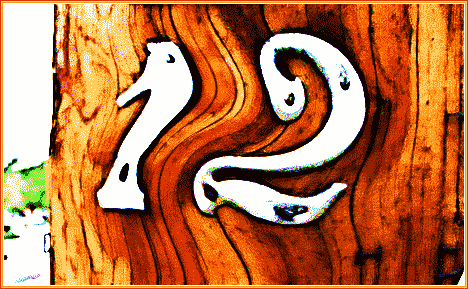
Twelve is a composite number, the smallest number with exactly six divisors, its proper divisors being 1, 2, 3, 4, and 6. Twelve is also a highly composite number, the next one being 24.

Twelve is a superfactorial, being the product of the first three factorials.

Twelve being the product of three and four, the first four positive integers show up in the equation 12 = 3 × 4, which can be continued with the equation 56 = 7 × 8.

A twelve-sided polygon is a dodecagon. A twelve-sided polyhedron is a dodecahedron. Twelve is a pentagonal number.

The number twelve is often used as a sales unit in trade, and is often referred to as a dozen. Twelve dozen are known as a gross. (Note that there are thirteen loaves in a baker’s dozen.) The duodecimal system (1210 [twelve] = 1012), which is the use of 12 as a division factor for many ancient and medieval weights and measures, including hours, probably originates from Mesopotamia. See also: base 12. As Schoolhouse Rock explains in its song “Little Twelvetoes”, if humankind had been born with twelve fingers, they would have counted and multiplied using the duodecimal system. (There is no need to have twelve fingers though, since one will easily arrive at the duodecimal system by simply counting the phalanx of fingers with the same hand’s thumb, a practice in use with some people until the present day.)

In base thirteen and higher bases (such as hexadecimal), twelve is represented as C.

Etymology (Weekley, Skeat) suggests that “twelve” (similar to “eleven”) consists of two parts, the first meaning “two” and the second “leftover”, so a literal translation would yield “two remaining [after having ten taken]”.

Twelve is superabundant, sparsely totient, a Harshad number, and a Pell number.

The geometry of twelve

It is possible to construct a perfect circle divided into twelve sectors of 30 degrees each, using only a compass and straightedge. The interesting thing about this construction is that it yields exactly twelve sectors, no more and no less, revealing the unique geometrical perfection of the number twelve. Follow these steps to construct this figure:

1. Using a compass, construct a simple circle.
2. Taking care not to change the radius setting, draw a second circle with center anywhere on the perimeter of the first.
3. Now go to the two points where the second circle crosses the first, and draw two more circles from these centers.
4. Continue this process to draw the final three circles, working your way around the perimeter of the first.
5. Finally connect the center of the original circle with all other points of intersection, using a straightedge.

You now have twelve radial lines emanating from the center, separated by twelve 30-degree sectors, all constructed from seven equal-sized circles.

In science

The atomic number of magnesium

In astronomy

Messier object M12, a magnitude 8.0 globular cluster in the constellation Ophiuchus.

The New General Catalogue object NGC 12, a magnitude 13.1 spiral galaxy in the constellation Pisces.

The Saros number of the solar eclipse series which began on -2680 August 8 and ended on -1129 February 25. The duration of Saros series 12 was 1550.5 years, and it contained 87 solar eclipses.

The Saros number of the lunar eclipse series which began on -2360 May 28 and ended on -1062 July 17. The duration of Saros series 12 was 1298.1 years, and it contained 73 lunar eclipses.

The 12th moon of Jupiter is Lysithea.

In time

There are twelve months in a year.

The Western zodiac has twelve signs, as does the Chinese zodiac.

There are twenty-four hours in a day in all, with twelve hours for a half a day. The hours are numbered from one to twelve for both the ante meridiem (a.m.) half of the day and the post meridiem (p.m.) half of the day. 12:00 after a.m. and before p.m. (in the middle of the day) is noon, and 12:00 after p.m. and before a.m. (in the middle of the night) is midnight. A new day is considered to start with the stroke of midnight.

The minute hand of a clock face turns twelve times faster than the hour hand.

In other fields

In English, twelve is the number of greatest magnitude that has just one syllable.

There are normally twelve pairs of ribs in the human body.

Jewish tradition and the old testament of the Bible talks of twelve tribes of Israel. The New Testament describes twelve apostles of Jesus. The Book of Revelation 12:1 mentions a woman – usually interpreted as Virgin Mary – wearing a crown of twelve stars.

Twelve stars are also featured on the European flag.

In modern Jewish practice, a girl gets her bat mitzvah on the Shabbat after her twelfth birthday.

In the United States, twelve people are appointed to sit on a jury for felony trials in all but four states, and in federal and D.C. courts. The number of jurors in the movie gave the title to the film 12 Angry Men.

In Astrology, Pisces is the 12th and final astrological sign of the Zodiac.

There have always been 12 eggs in a dozen, 12 hours on a clock, 12 days of Christmas, 12 inches in a foot, 12 months in a year, 12 steps in a staircase, 12 ounces in a Troy pound (used for precious metals), 12 constellations in the ecliptic (or signs of the zodiac), 12 tribes of Israel, 12 gears on a racing bicycle, 12 disciples of Christ, and 12 volts in a car battery.

Other movies with the number twelve in their titles include The Dirty Dozen, 12 Monkeys, Ocean’s Twelve and Twelve Chairs.

The song Twelve Days of Christmas came from the traditional practice of extending Yuletide celebrations over the twelve days from Christmas day to the eve of Epiphany; the period of thirteen days including Epiphany is sometimes known as as Christmastide.

Twelfth Night, another name for the 12th Day of Christmas or January 5 (the eve of Epiphany), gives its name to a Shakespeare comedy, as well as that of progressive rock band.

Twelve is:

* ASCII and Unicode code point for form feed.
* In music, the number of pitch classes in an octave, not counting the duplicated (octave) pitch. Also, the total number of major keys, (not counting enharmonic equivalents) and the total number of minor keys (also not counting equivalents). This applies only to twelve tone equal temperament, the most common tuning used today in western influenced music.
* In Greek mythology, the number of labours of Heracles (Hercules).
* The number of dan (master) grades in judo.
* The designation of United States Interstate 12, a freeway in Louisiana.
* In the Netherlands, highway A12 connects The Hague via Utrecht and Arnhem with the German border. In Germany, highway A12 connects Berlin with the Polish border near Frankfurt an der Oder. In Belgium, highway A12 connects Brussels via Antwerp with the Netherlands
* European route E12 – Mo i Rana – Umeå … Vaasa – Tampere – Hämeenlinna – Helsinki
* In rugby union one of the centres, most often but not always the inside centre, wears the 12 shirt.
* The number of function keys on most PC keyboards (F1, F2, F3, F4, F5, F6, F7, F8, F9, F10, F11, and F12)
* The number of dialling keys in any standard digital telephone (1, 2, 3, 4, 5, 6, 7, 8, 9, 0, * and #)
* In the Ishihara color test, 12 is on the first plate which both persons with normal vision and colorblind persons can discern
* Historical years: A.D. 12, 12 B.C., or 1912

Source: wikipedia.org

jace

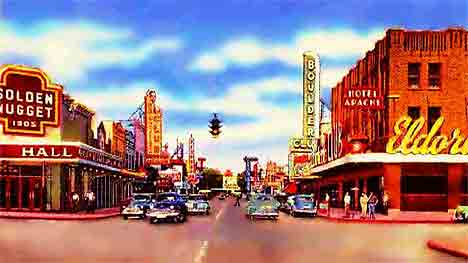
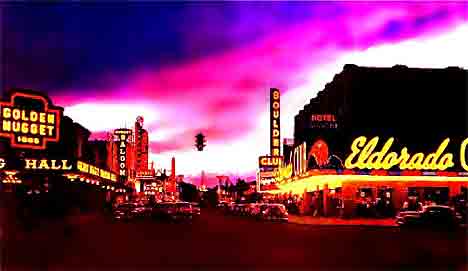
Downtown Las Vegas
Fremont & Second Street – Daytime – 1950

jace

Downtown Las Vegas
Fremont & Second Street – Nighttime – 1950

[click to continue…]

Monte Carlo methods are a class of computational algorithms for simulating the behavior of various physical and mathematical systems. They are distinguished from other simulation methods (such as molecular dynamics) by being stochastic, that is nondeterministic in some manner – usually by using random numbers (or more often pseudo-random numbers) – as opposed to deterministic algorithms. A classic use is for the evaluation of definite integrals, particularly multidimensional integrals with complicated boundary conditions. [click to continue…]

The Nevada state tax on gambling revenues is 6.25% (this is what the casinos pay).

The Flamingo Hilton was originally the Flamingo — built by infamous mobster Bugsy Siegel, and the first official “carpet joint” on the strip.

MGM Mirage, after the recent acquisition of Mandalay Resort Group, now owns The Mirage, Treasure Island, Bellagio, the Golden Nugget, the MGM Grand, New York New York, all three properties at the Nevada-California border (Whisky Pete’s, Primm Valley, and Buffalo Bill’s), Circus Circus, Excalibur, Luxor, Mandalay Bay, Monte Carlo and both casinos in Jean near the Nevada-California border (Nevada Landing and Gold Strike).

The MGM Grand is the nation’s largest hotel with over 5000 rooms.

The Western wing of the MGM Grand is actually the old Marina Hotel and Casino. It was renovated and connected with the new building instead of being torn down.

The Stardust was the first hotel to add a sports book to its casino.

Steve Wynn’s first Las Vegas investment was a large parking lot next to Caesars Palace. He announced plans to build a hotel on the lot; Caesars Palace got nervous and paid Wynn a handsome premium for the property.

Park Place Entertainment is Hilton’s gaming division. They own the Las Vegas Hilton, Caesar’s Palace, the Flamingo Hilton, Paris Las Vegas, Bally’s, and O’Shea’s.

The vacant lot across from the Sahara has been empty since the original El Rancho Vegas burned down on that site 40 years ago. It was one of the first resorts on the strip.

Elvis and Priscilla Presley were married at the original Aladdin hotel, which was torn down in 1998, rebuilt in 2000, bankrupt in 2001, then sold to OpBiz in 2003.

In the early days of the strip, slot machines were initially a diversion for the women companions of male gamblers who were busy at the tables. Now slot machines typically earn 60% or more of a casino’s take.

The first place Frank Sinatra played in Las Vegas was the Desert Inn.

Howard Hughes stayed at the Desert Inn so long, the owners asked him to leave. He offered to buy the hotel and the owners sold, thus beginning his casino buying spree. He is often credited with bringing corporate legitimacy to gaming interests.

The Golden Gate hotel and casino in downtown is the oldest hotel in Las Vegas (1906).

The Riviera was the first high-rise hotel on the Strip when it arrived in 1955.

The casino scenes in the movie Casino (Robert De Niro, Sharon Stone, Joe Pesci) were filmed in the Riviera, probably because it had not changed much since the 70s – the era that the film depicted.

The chess notation format most people think of when they think of chess is called descriptive notation, with moves like P-K4, N-KB3, etc. There are many systems of chess notation, three of which are common today. These are descriptive, coordinate, and algebraic. Algebraic is the “official” notation used in tournaments and in all modern books, and it is kind of a cross between descriptive and coordinate.

The main thing to remember when looking at a chess diagram, regardless of the notation system used, is that the board is always “right-side up” for White, meaning White is always shown as playing from the “bottom” of the board. The board is always “up-side-down” for Black. Also, when placing a chess board down to play, the square in the lower left hand corner should always be black (the darker of the two colors).

The rows on the board (running left to right) are called ranks. The columns (running the length of the board between the two players) are called files. Series of squares running at a 45 degree angle (assuming a square board), composed of squares of all the same color, are called diagonals. The longest diagonals run from the lower-left-hand corner to the upper-right-hand corner, and the lower-right-hand corner to the upper-left-hand corner.

In chess notation, each square has a name. In descriptive notation the names of the squares depend upon which side of the board you are playing from. In either algebraic or coordinate notation, the names of the squares are absolute, no matter which side you are sitting on. To illustrate:

Descriptive Notation

The board is divided into two halves, the queenside and the kingside. In the diagram below, the names of the squares from White’s point of view are in UPPER CASE and in white text, and the names of the squares from Black’s point of view are in lower case and black text. Which point of view is used depends on whose turn it is. The names of the squares are based on the name of the piece that sits in the home row at the start, and are differentiated from each other by whether they belong to the kinside or the queenside. The squares are always numbered away from the player (1 being closest and 8 being furthest from the player.)
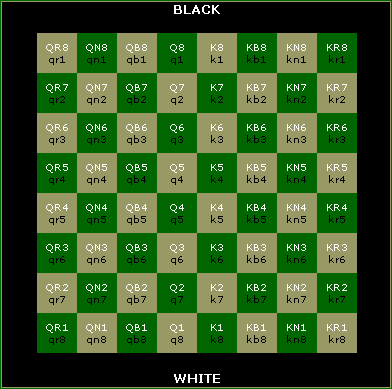
jace

While this system makes notating the game equally easy for White and Black, it can get confusing with each square essentially having two names (depending on whose point of view it’s referring to.) The pieces are designated as:

K = King
Q = Queen
R = Rook
B = Bishop
N = Knight
P = Pawn

These abbreviations also serve as the key to the diagram above. Note that the Knight is designated with an N, since K is already taken by the king. Old books will sometimes use Kt instead for the Knight. A move is written by first naming the piece that is moving, indicating whether it is a regular move (indicated by a dash) or a capture (indicated by a lower case “x”), and finally indicating the arrival square or the piece being captured. All letters for the pieces and squares are written in upper case (I only used lower case for Black in the diagram above to make it easier to read). So, for example, P-K4 means “take a pawn and move it to K4”. NxQ means “Knight takes Queen”.

Also, moves are always stated in the simplest manner that still describes only one unique and legal move on the board. For example, if only one pawn can move to B4, then you do not designate whether it is KB4 or QB4, as there is only one choice, and would write P-B4. If there is more than one such possibility, then you would clarify it with either P-KB4 or P-QB4. Sometimes two pieces can go to the same square, such as two Rooks on the first rank being able to move to Q1. R-Q1 would not be adequate in this case. You would designate which rook moved by noting which side of the board it originally came from, such as QR-Q1 or KR-Q1. If it can’t be determined which side of the board the piece originally came from (usually late in the game), then you assume the piece farthest on the kingside of the board (this never changes even when the King moves) came from that side, and the other came from the queenside. If they are both on the same file, then you can designate the rank the piece came from with a slash. Suppose two rooks can go to Q4, one being on Q8 and the other on Q1, you would say R/1-Q4 or R/8-Q4, depending on which rook was moved. The same rules apply to captures, whether you need to clarify which piece is doing the capturing, or which piece is being captured.

Check is designated by appending “ch” after the move, such as Q-N8 ch. Checkmate is indicated by appending the word “mate”, such as N-B7 mate. Appending “ch” or “mate” is enough to make a move unique. Thus, if a Queen can take either of two Bishops, but only one choice gives check, it is enough to say QxB ch. The other choice, QxB, would be unique because of the absence of the “ch”. The same is true of “mate”. En passant is indicated as PxP e.p. Castling kingside (also called castling short) is indicated O-O, and castling queenside (also called castling long) is O-O-O. Promotion of a pawn to another piece is indicated in parentheses, i.e., P-Q8(Q), or P-B8(N).

While this system was in use for most of this century, it was eventually replaced by algebraic because of the confusion over the names of squares and the extent to which ambiguities in notation would arise. It is still important to know, however, as many older books still use this notation, and even some more recent books, such as the manual for Battle Chess. Also, many older players prefer this and will use it, so it has by no means died out, but it is definitely out of favor, and no longer the official notation of chess.

The next two systems I will describe, algebraic and coordinate, are very similar, and even share the same names for the squares. The ranks are still numbered 1-8, as in descriptive notation, but instead the files are designated with the letters a-h. There is only one point of view: White’s. This has the advantage that each square has only one name, and can be easily referred to away from a board. The disadvantage is that Black has to look at the board with the ranks and files numbered and lettered backward, but this is easy to get used to for most people, especially since most newer boards have the numbers and letters along the edges for reference. The names of the squares for these two systems are shown in the following diagram, which you can compare to the one for descriptive above.

Coordinate and Algebraic Notation
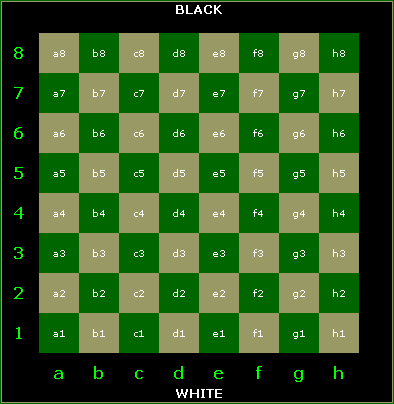
jace

Coordinate notation simply uses the coordinates of the square the piece comes from, a dash, and the coordinates of the square the piece moved to. Example moves are E2-E4, E7-E5, etc. An “=” is used to indicate pawn promotion, i.e., E7-E8=Q. Everything is entered in caps. Castling is indicated by showing where the king moved (it is the only time it will move two spaces to either side). No distinction is made between a move and a capture. This system is used almost solely with computers, as it is easiest to program, because there is no possibility for ambiguous moves. Humans don’t favor it much, however, as looking at the move on a scoresheet tells you nothing about what is going on in the game, and it is prone to being misread when replaying a game using its score.

Algebraic notation uses the same names for squares as coordinate notation, but uses the piece names from descriptive notation, with one exception – a Pawn is given no designation. Instead, a Pawn is indicated by the absence of a piece letter. Piece letters belong in caps, square letters in lower case. This is important when differentiating a Bishop from a square on the b-file, for example. Unlike descriptive, no dash is used to indicate movement of a piece. So, moving a Knight from g1 to f3 would be written Nf3. A pawn moving to e4 would simply be “e4”. An “x” is used to indicate a capture, just as in descriptive notation. To lessen the potential for ambiguity, however, the square the captured piece rests on is used instead of the name of the piece. So, a Knight capturing a Queen on d8 would be written Nxd8. A pawn capture is indicated by noting the letter of the file the pawn came from, and its arrival square upon completing the capture. For example, exd5 would indicate the pawn came from the e-file, and captured the piece on d5. Similarly, gxh7 would indicate a pawn on the g-file took the piece on h7.

Ambiguities are resolved by indicating the rank or file the piece came from (whichever is unique – if both are unique, use the letter of the file). For example, Nbd7 would mean the Knight on the b-file moves to d7, and N4xd6 would mean the Knight on the 4th rank captures the piece on d6. Note this is much simpler than resolving ambiguities in descriptive notation.

Check is indicated by a “+” after the move, such as Qg8+. Checkmate is indicated with two plusses, “++”, such as Nf7++. Castling is indicated the same way as in descriptive notation, which is O-O for castling kingside (short), and O-O-O for castling queenside (long). En passant is indicated the same way as a normal Pawn capture. However, since the square the captured pawn stood on is not the same as the arrival square of the pawn making the capture (as it is in all other captures), one method had to be chosen over the other. Since algebraic notation and coordinate notation are closely related, it was decided to keep it the same, and use the _arrival square_ of the pawn, and not the square the captured pawn stood on. To further clarify that it is an en passant capture, “ep” is appended after the move. So, a pawn on e5 capturing the pawn on f5 that has just moved two squares forward would be written exf6ep. Pawn promotion uses the “=” sign like coordinate notation. A pawn on e7 being promoted to a Queen would be written e8=Q.

Algebraic notation is now the “official” language of chess, both in the US and internationally. The only difference in other countries is that they have different names for the pieces, so the letters used to designate the pieces vary.

One variation on algebraic sometimes encountered is long algebraic. This is the same as algebraic in every way, except that square the piece originated from is also indicated, and a dash is used to separate the originating square and the arrival square for a regular move. An “x” is still used to indicate a capture, lower case is still used for the names of the squares, and pawns are still designated by the absence of a letter. Thus moves look like e2-e4, Ng1-f3, Bc8-f5, Nb8xc6, e5xd4, O-O, Ng5xf7+, d4xe3ep, g2-g1=Q, etc.

Notice that while this is a little longer to write out, it has the advantage of avoiding ambiguities altogether, since both the originating and arrival squares are given. It also has an advantage over coordinate notation, which is that since the piece names are given, you can tell better by looking at the score what is happening on the board, because it provides more information. This extra information also helps to compensate for errors made in notation. Since errors in notation are especially unwanted in postal chess due to the long response times, where a single error can take a week to correct by the time the original player is informed of the error and a reply is sent back to correct the error, this notation is well-suited for postal chess.

Below is a quick sample game fragment showing all four notations side-by-side. All four notation lists are identical in content, and should all arrive at the same position, shown below.

Algebraic:
1.e4 e5
2.Nf3 Nc6
3.Bb5 a6
4.Bxc6 dxc6
5.d3 Bb4+
6.Nc3 Nf6
7.0-0 Bxc3

Coordinate:
1.E2-E4 E7-E5
2.G1-F3 B8-C6
3.F1-B5 A7-A6
4.B5-C6 D7-C6
5.D2-D3 F8-B4
6.B1-C3 G8-F6
7.E1-G1 B4-C3

Descriptive:
1.P-K4 P-K4
2.N-KB3 N-QB3
3.B-N5 P-QR3
4.NxN QPxB
5.P-Q3 B-N5ch
6.N-B3 N-B3
7.0-0 BxN

Long Algebraic:
1.e2-e4 e7-e5
2.Ng1-f3 Nb8-c6
3.Bf1-b5 a7-a6
4.Bb5xc6 d7xc6
5.d2-d3 Bf8-b4+
6.Nb1-c3 Ng8-f6
7.0-0 Bb4xc3
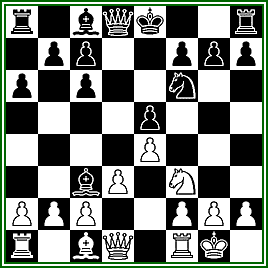
jace

If you can get that far in each notation, then you’re probably doing ok.

Also note that should one want to refer to a move in the game score above, for example, White’s 6th move, it would be written 6. Nc3 in a sentence. Notice there is only one period after the move number – this indicates it is a move by White. To refer to Black’s 6th move by itself, one would write 6…Nf6, the three dots (an ellipsis) indicating that it is a move made by Black. This convention is used regardless of which notation system is used, so one could just as easily write 5. P-Q3 or 5…B-N5ch, for example.

When reading game scores or annotated games (games with comments and analysis to go with the score), one will often run into the use of “?” and “!”, such as 20. Rd8? or 30…Bxh3! This is to indicate the relative strength or weakness of a given move, in the mind of the writer. A “?” indicates a weak move or mistake. A “!” indicates an excellent move, usually one that is unexpected and requires deep analysis to see why it works. Some writers will use the “?” and “!” additively, thus 20. Rd8?? would be a horrible move, and 30…Bxh3!! would be a truly inspired move. Since this can quickly get out of hand, restraint is required by the writer, and one usually never sees more than two punctuation marks.

Another way the “?” and “!” can be used is to combine them, such as 20. Rd8?! or 30…Bxh3!?. The meaning of this depends on which punctuation mark comes first. “?!” is often used to mean a questionable move, but not an outright mistake. This can also be represented as a question mark in parentheses, for example, 20. Rd8 (?), but is seen much less often nowadays than “?!”. The combination “!?” is often used to indicate surprise at a particular move, and often also to mean that move is speculative and risky, but probably good (which is why the “!” goes first).

None of this punctuation (?, !, ?!, and !?) is required, and is used primarily as a diagnostic or learning tool, and to allow a little room for expression in game scores or analysis. It is included here so you can make sense of it when you see it in other people’s game scores or analyses. Do not include these marks when simply taking down the score of a game or sending your reply to someone in a game. These are reserved for analysis only, which occurs after the game is over.

Adapted from a file by Joe Brooks.
Americans buy 2.7 billion packages of breakfast cereal each year. If laid end to end, the empty cereal boxes from one year’s consumption would stretch to the moon and back.

The cereal industry uses 816 million pounds of sugar per year, enough to coat each and every American with more than three pounds of sugar. The cereal with the highest amount of sugar per serving is Smacks, which is 53% sugar.

Americans consume about ten pounds, or 160 bowls of cereal, per person each year. But America ranks only fourth in per capita cereal consumption. Ireland ranks first, England ranks second, and Australia ranks third. 49% of Americans start each morning with a bowl of cereal, 30% eat toast, 28% eat eggs, 28% have coffee, 17% have hot cereal and fewer than 10% have pancakes, sausage, bagels or french toast.

In terms of dollar value breakfast cereals are the third most popular product sold at supermarkets, after carbonated beverages and milk. Cigarettes are the fourth most popular item followed by fresh bread and rolls.

In 1993, more than 1.3 million advertisements for cereal aired on American television, or more than twenty-five hours of cereal advertising per day, at a cost of $762 million for air time. Only auto manufacturers spend more money on television advertising than the makers of breakfast cereal.

“It is difficult to produce a television documentary that is both incisive and probing when every twelve minutes one is interrupted by twelve dancing rabbits singing about toilet paper.”
— Rod Serling