Client: McDavid
Hex Is Hip Ad (Volleyball)
2005
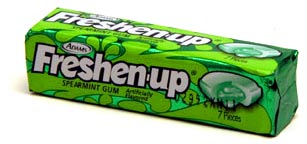
“The gum that goes squirt.” Do they still make this? Cinnamon was the best.
To see this classic ’80s commercial, download the following .wmv file (1mb) to your computer and open it:
So here we are, coincidentally enough, at 8/8. I’ll explain.
Hit the Monte Carlo Las Vegas last week. It’s my favorite poker room in town, standing out against some of the other Chuck E. Cheesy rooms you’ll find nearby at the Excalibur, Luxor, and Aladdin.
The Monte Carlo has one of the more secluded, intimate settings that you’ll find on the strip, with dealers that are notably more personable than some of the purely mechanical robot types you’ll find dealing at, say, the MGM Grand. This is not to say that robotic dealers are always bad. Quite the contrary. It can be nice to have a dealer just shut up and keep the game moving at times.
The Monte Carlo poker room has a series of progressive “High Hand Jackpots” going 24/7. High Hands include all straight (and royal) flushes and four-of-a-kinds. If you hit any of these High Hands, you’re immediately awarded a jackpot on the spot, complete with roomwide recognition of your accomplishment and an official presentation of chips totaling the amount of the jackpot. The jackpot is separate from the hand’s pot itself.
How much a High Hand is worth at any given moment depends on the room’s history. There are video screens in all corners of the room, displaying a ticker of sorts, listing all the High Hands, along with their current value. The video screens will constantly be scrolling the following hands all day long:
Royal Flush (Spades)
Royal Flush (Hearts)
Royal Flush (Diamonds)
Royal Flush (Clubs)
Straight Flush (910JQK)
Straight Flush (8910JQ)
Straight Flush (78910J)
Straight Flush (678910)
Straight Flush (56789)
Straight Flush (45678)
Straight Flush (34567)
Straight Flush (23456)
Straight Flush (A2345)
Four Of A Kind (AAAA)
Four Of A Kind (KKKK)
Four Of A Kind (QQQQ)
Four Of A Kind (JJJJ)
Four Of A Kind (10101010)
Four Of A Kind (9999)
Four Of A Kind (8888)
Four Of A Kind (7777)
Four Of A Kind (6666)
Four Of A Kind (5555)
Four Of A Kind (4444)
Four Of A Kind (3333)
Four Of A Kind (2222)
After each High Hand on the screen, it’ll have a dollar value. The amount the High Hand is worth depends on how recently somebody has hit that particular hand in the Monte Carlo poker room. For instance, AAAA could pay a jackpot of $180, while KKKK would simultaneously have a jackpot of $500. Sure, the Aces beat the Kings, but the KKKK has a higher jackpot at the moment because it’s been longer since somebody’s hit ’em.
*Note: there are separate jackpots for Texas Hold ’em and Seven Card Stud.
A couple rules to be aware of here. First, you must be holding two of the cards in the High Hand. You can’t be holding AK, have the board show three more Kings, and then be eligible for the KKKK jackpot. You’d need to be holding KK. Also, there must be at least $20 in the pot for your High Hand to claim the jackpot. This is important to understand.
The jackpot factor adds a new element to the way you play the game, particularly what hole cards you’ll pay to see a flop with. While I was there, the big jackpots, all worth $500, happened to be KKKK, 5555, and 4444. What this means is that if you get a pair of fives in the hole and are faced with a raise and a re-raise before the flop, it’ll be worth it to stay in the hand due to the jackpot factor. If there was no jackpot for the 5555, then pocket fives would be the type of hand you’d fold before the flop after a raise and a re-raise.
So on my afternoon session, I’m sitting at a packed table. Ten of us. I’m in desirably late position, with the button to my left. Dealer deals the hole cards. I wait, watching what the players in early position are doing. Three people fold, two others call. Action gets to me, with the button and blind to follow (there’s only one blind at the Monte Carlo in 2/4 Hold ’em; no small blind). I look down at my cards:
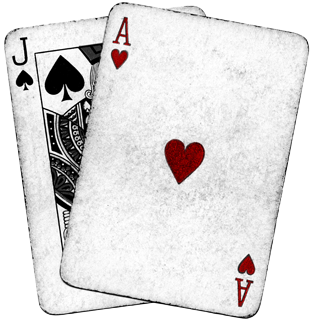
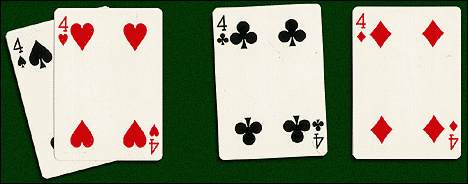
4 of Hearts, 4 of Spades.
Nice. I’d been in this situation a few times over the last couple days, holding 55 and KK on a few occasions. Now I’ve just hit my first pocket fours of the trip, which, although it’s a long shot, gives me a prayer to hit a jackpot if I get some love from the board. I call, the button folds (effectively putting me in last position from here on out), the blind option checks it through. Here comes the flop:
Q 9 4
I’ve just flopped a set. Not bad! Let’s see what the table does now. The blind checks, one guy bets, followed by a couple folders. It gets to me. I’m now faced with a decision, one that’s interestingly affected by the jackpot factor. Normally I’d raise right here, protecting the trips. However, if I do so, I might not only scare the blind away, but if the original bettor is on some sort of straight draw or holding something like A9, there’s a chance he’d fold. I DON’T WANT ANYBODY TO FOLD. I want to see the next two cards, since there’s a remote chance I’d hit my fourth four. I also want the pot to grow to at least $20 in order to qualify for the jackpot if I happen to hit it. I call. The blind folds.
Heads-up between me and the guy representing a hand. I’m guessing he probably either is on a draw, or he hit a pair (Q or 9) on the flop.
The turn card comes:
Q 9 4 A
A pretty good card for me. That Ace may have helped him, giving him a very possible two pair, but there’s no flush draw on the board. The guy bets. I call. Pot’s over $20 now. My trips are looking good. Only thing he could be holding that worries me would be AA, QQ, or 99.
River card:
Q 9 4 A 4
!!!!!
Time stands still, and I almost have a heart attack. I just hit Quads! What are the chances of that? Well, that would be a probability of 0.000240, or 1 : 4,164 odds. Wow. I can remember noticing myself reacting by inadvertently sitting back in my chair (if my opponent was paying close attention, he’d have noticed that my gesture showed strength) and glancing up at the video screen to see how much the 4444 jackpot is worth. The guy bets, I raise, he just calls.
We turn ’em up, and the dealer shouts the announcement to the room director: “We’ve got a a High Hand at Table Twelve!!!”
The whole room applauds, the girl comes out with a rack of $500 in chips, and I’m a celebrity for an hour. Lucky me. I think it might’ve had something to do with my pinkish neon orange aloha shirt.
So remember, when you’re playing the poker rooms, always ask if there are jackpots. If there are, be aware of the terms. If you’re holding two cards that have a remote possibility of hitting something big, you’ll want to at least hang in there and see a flop. Hey, Columbus took a chance.
And by the way, please remember to tip your dealer on both your winning pots and those rare jackpots. 10%. It’s the right thing to do.
Here are all 40 of The Percussive Arts Society’s Essential Snare Drum Rudiments, grouped by families first, followed by the Logical Learning Sequence.
Single Stroke Rudiments
1. Single Stroke Roll:

2. Single Stroke Four:
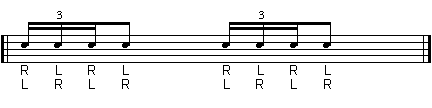
3. Single Stroke Seven:

Roll Rudiments
4. Multiple Bounce Roll:
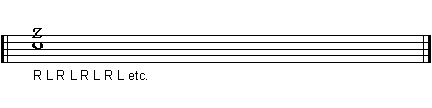
5. Triple Stroke Roll:
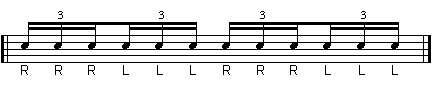
6. Double Stroke Roll:
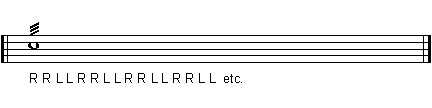
7. Five Stroke Roll:
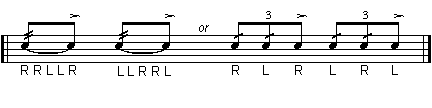
8. Six Stroke Roll:
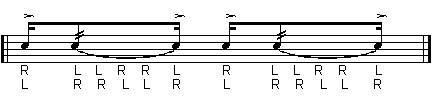
9. Seven Stroke Roll:
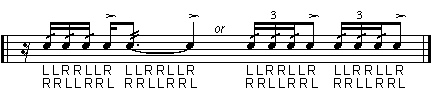
10. Nine Stroke Roll:
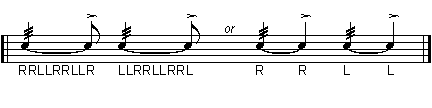
11. Ten Stroke Roll:
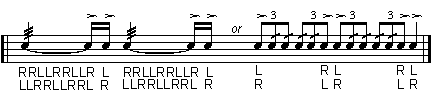
12. Eleven Stroke Roll:
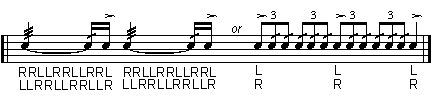
13. Thirteen Stroke Roll:
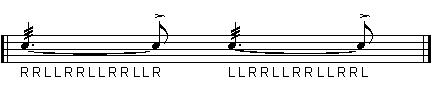
14. Fifteen Stroke Roll:
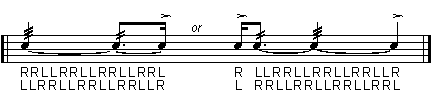
15. Seventeen Stroke Roll:
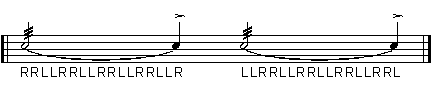
Diddle Rudiments
16. Single Paradiddle:
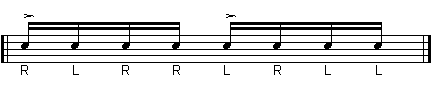
17. Double Paradiddle:
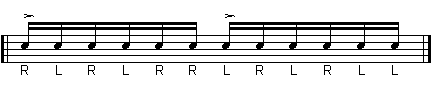
18. Triple Paradiddle:
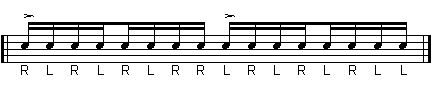
19. Single Paradiddle-diddle
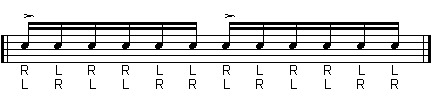
Flam Rudiments
20. Flam:
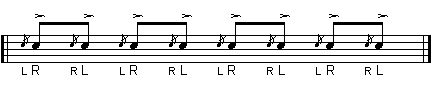
21. Flam Accent:
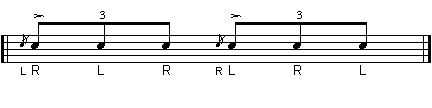
22. Flam Tap:
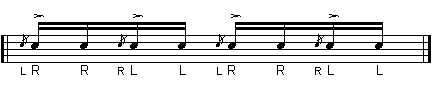
23. Flamacue:
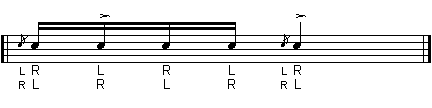
24. Flam Paradiddle:
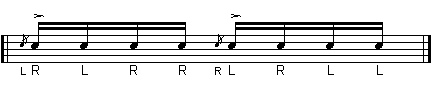
25. Single Flammed Mill:
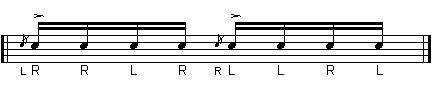
26. Flam Paradiddle-diddle:
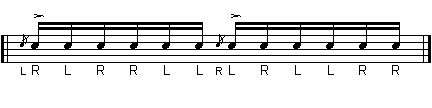
27. Pataflafla:
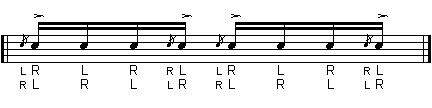
28. Swiss Army Triplet:
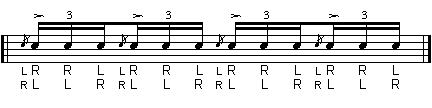
29. Inverted Flam Tap:
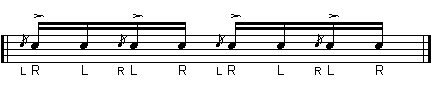
30. Flam Drag:
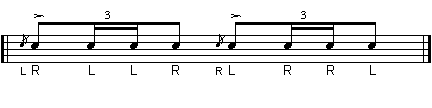
Drag Rudiments
31. Drag:
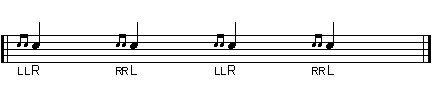
32. Single Drag Tap:
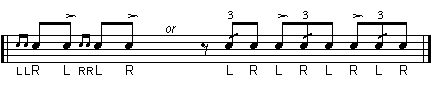
33. Double Drag Tap:
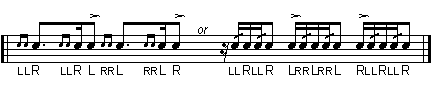
34. Lesson 25:
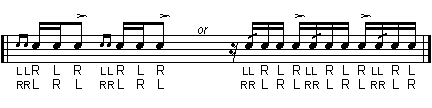
35. Single Dragadiddle:
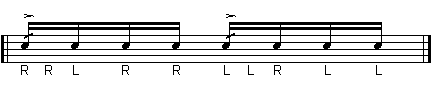
36. Drag Paradiddle #1:
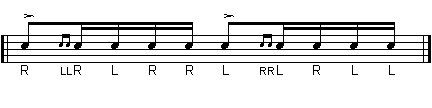
37. Drag Paradiddle #2:
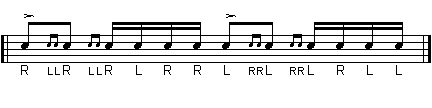
38. Single Ratamacue:
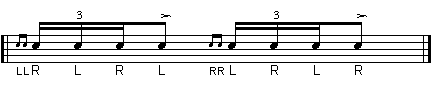
39. Double Ratamacue:
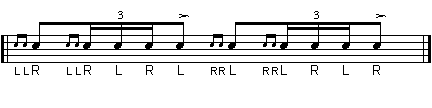
40. Triple Ratamacue:
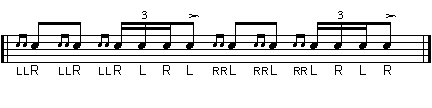
Dennis DeLucia developed this guide to give directors, instructors, and students an approach to learning the rudiments that takes into account difficulty, inclusion of rudiments from each rudimental family, and popular usage. The 10 rudiments in Quadrant A form the basis for all of the other rudiments. Beginning students should begin there and eventually progress through the other quadrants after they have achieved a medium level of proficiency.
Quadrant A
1. Single Stroke Roll
2. Single Stroke Four
3. Single Paradiddle
4. Multiple Bounce Roll
5. Double Paradiddle
6. Flam
7. Flam Tap
8. Ruff (Drag)
9. Five Stroke Roll
10. Open (Double Stroke) Roll
Quadrant B
11. Single Stroke Seven
12. Paradiddle-diddle
13. Flam Accent
14. Swiss Army Triplet
15. Flamacue
16. Nine Stroke Roll
17. Thirteen Stroke Roll
18. Seventeen Stroke Roll
19. Lesson 25
20. Single Dragadiddle
Quadrant C
21. Triple Paradiddle
22. Six Stroke Roll
23. Seven Stroke Roll
24. Fifteen Stroke Roll
25. Flam Paradiddle
26. Single Flammed Mill
27. Pataflafla
28. Single Drag Tap
29. Double Drag Tap
30. Single Ratamacue
Quadrant D
31. Triple Stroke Roll
32. Ten Stroke Roll
33. Eleven Stroke Roll
34. Iverted Flam Tap
35. Flam Drag
36. Flam Paradiddle-diddle
37. Drag Paradiddle #1
38. Drag Paradiddle #2
39. Double Ratamacue
40. Triple Ratamacue