“In three words I can sum up everything I’ve learned about Life: it goes on.”
— Robert Frost
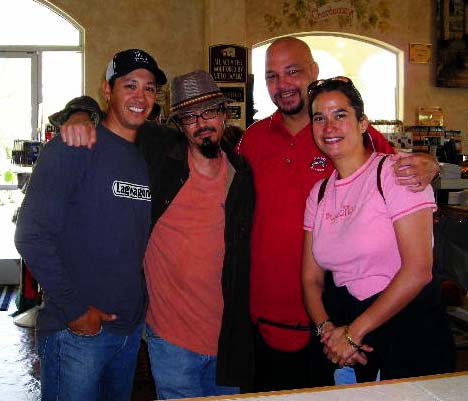
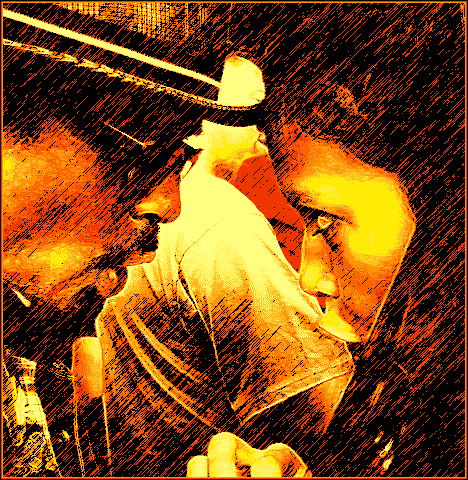
My cousin Kevin and his wife Kat were visiting from Kauai a couple weeks ago, so my bro Micah and I carved out a day to do some wine tasting with them in Temecula. Here we are at our second stop. Or maybe it was our third.
In either case, it turned out to be the perfect way to cap off the preliminary Sierra Nevadas from lunch.
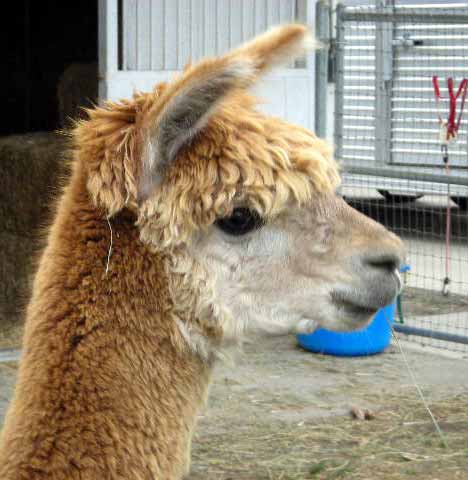
Visited the folks out in Temecula recently, and stopped by a neighbor’s ranch while taking the dogs for a walk through the area. I think these are llamas. Some of the trippiest animals I’ve ever seen. Especially with the eye contact.
Still Standing
by Jace Daniel (b. 1969)
It was Opening Day. The young boy, who grew up in the country, had never been to a big league baseball game in his short eight years. Today was the day to change that, as Grandfather had two bleacher tickets for the first ballgame of the season. A sold-out game to see his favorite team, the Dodgers.
Dodger Stadium was more immense than the young boy had ever imagined. As he and Grandfather made their way to the seats just minutes before the game, his eyes were like saucers, peering out from under his oversized Little League cap, wandering through every corner of the stadium, soaking in the scene. The sunny Spring afternoon air held an obscurely distinct aroma that could only be described as a melange of hot dogs, peanuts, and freshly mown grass.
“Here we are,” said Grandfather, pointing to two empty seats in the front row of the right field bleachers. Grandfather placed his windbreaker down on the seat, sitting down. Like a copycat, the young boy did the same.
“You stay here and hold our seats,” said Grandfather. “I’ll be right back with hot dogs and Cokes…”
Grandfather got cut off as the Stadium Announcer asked the crowd to rise for the National Anthem. “Take off your hat and stand up,” instructed Grandfather. The young boy obliged. He’d never heard such a loud voice in his life, the booming P.A. echoing through the crowd of more than fifty thousand people.
The band began playing National Anthem as Grandfather stood still, unmoving. The curious young boy fidgeted, turning to see the rows of people standing behind him. He turned forward, standing on his tiptoes in wonder, looking to the sea of people to his left, the sea of people to his right, the immeasurable wall of people stacked to the sky on the other side of the immaculately prepared field.
“… and the home … of the … brave.” The band concluded the familiar melody as the crowd roared, gradually standing at ease, putting their hats back on, taking their seats. The boy did the same. Grandfather looked down at him.
“From now on,” began Grandfather, “Whenever you hear somebody play our country’s National Anthem, you stand still.” Grandfather’s voice was patient, yet stern. “You understand? Still.”
The young boy nodded.
“Good,” said Grandfather. He smiled. “Mustard and onions?”
And so the young boy grew to be an old man, and went to many baseball games, and heard the National Anthem many times. Over the years he taught his son, and his son’s sons, and his son’s sons’ sons, what his Grandfather taught him on that day long ago when he was a little boy at his first big league baseball game.
Stand still.
Names derived from the Hebrew Pesach (פסח) Passover
Latin Pascha or Festa Paschalia
Greek Πάσχα (Paskha)
Afrikaans Paasfees
Albanian Pashkët
Amharic (Fasika)
Arabic عيد الفصح (ʿAīd ul-Fiṣḥ)
Azeri Pasxa, Fish (pron: fis`h)
Berber tafaska (nowadays it is the name of the muslim “Festival of sacrifice”)
Catalan Pasqua
Danish Påske
Dutch Pasen or paasfeest
Esperanto Pasko
Faroese Páskir (plural, no singular exists)
Finnish Pääsiäinen
French Pâques
Hebrew פסחא (Pascha)
Icelandic Páskar
Indonesian Paskah
Irish Cáisc
Italian Pasqua
Japanese 聖大パスハ (Seitai Pasuha, “Holy and Great Pascha”)
Lower Rhine German Paisken
Malayalam: പെശഹ (Pæsacha/Pæsaha)
Norwegian Påske
Persian Pas`h
Polish Pascha
Portuguese Páscoa
Romanian Paşte
Russian Пасха (Paskha)
Scottish Gaelic Casca
Spanish Pascua
Swedish Påsk
Tagalog (Philippines) Pasko ng Muling Pagkabuhay (literally “the Pasch of the Resurrection”)
Turkish Paskalya
Welsh Pasg
Names used in other languages
Armenian Զատիկ (Zatik or Zadik, literally “separation”) or Սուրբ Հարություն (Sourb Haroutiwn, literally “holy resurrection”)
Belarusian Вялікдзень or (Vialikdzen’, literally “the Great Day”)
Bosnian Uskrs or Vaskrs (literally “resurrection”)
Bulgarian Великден (Velikden, literally “the Great Day”) or Възкресение Христово (Vazkresenie Hristovo, literally “Resurrection of Christ”)
Simplified Chinese: 复活节; Traditional Chinese: 復活節; pinyin: Fùhuó Jié (literally “Resurrection Festival”)
Croatian Uskrs (literally “resurrection”)
Czech Velikonoce (literally “Great Nights” [plural, no singular exists])
Dutch Pasen
English Easter
Estonian Lihavõtted (literally “meat taking”) or ülestõusmispühad
Georgian აღდგომა (Aĝdgoma, literally “rising”)
German Ostern
Hungarian Húsvét (literally “taking, or buying meat”)
Japanese イースター (Iisutaa, pronunciation of Easter in Japanese katakana) or 復活祭 (Fukkatsusai, literally “Resurrection Festival”)
Korean 부활절 (Buhwalchol, literally “Resurrection season”)
Latvian Lieldienas (literally “the Great Days,” no singular exists)
Lithuanian Velykos (derived from Slavic languages, no singular exists)
Macedonian Велигден (Veligden, literally “the Great Day”) or, rarely Воскрес (Voskres, literally “resurrection”)
Maltese L-Għid il-Kbir (means, “the Great Feast”)
Ossetic куадзæн, from комуадзæн “end of fasting”
Persian عيد پاك (literally “Chaste Feast”)
Polish Wielkanoc (literally “the Great Night”)
Serbian Ускрс (Uskrs) or Васкрс (Vaskrs, literally “resurrection”)
Slovak Veľká Noc (literally “the Great Night”)
Slovenian Velika noč (literally “the Great Night”)
Tongan (South-pacific) Pekia (literally “death (of a lord)”)
Ukrainian Великдень (Velykden’, literally “the Great Day”) or Паска (Paska)
Vietnamese Lễ Phục Sinh
I’m fascinated by this kind of stuff. From 7-Eleven to Kodak to Verizon to Yahoo!, a list of company name etymologies explained. Call it a celebration of commercial wordplay.