≡ Menu

jaced.com

This should whet your appetite. A side-by-side look at a fast food items as advertised along with their real-world counterparts.

Each item was purchased, taken home, and photographed immediately. Nothing was tampered with, run over by a car, or anything of the sort. It is an accurate representation in every case. Shiny, neon-orange, liquefied pump-cheese, and all.

Happy Earth Day.

“It is a grand mistake to think of being great without goodness, and I pronounce it as certain that there was never a truly great man that was not at the same time truly virtuous.”
— Benjamin Franklin

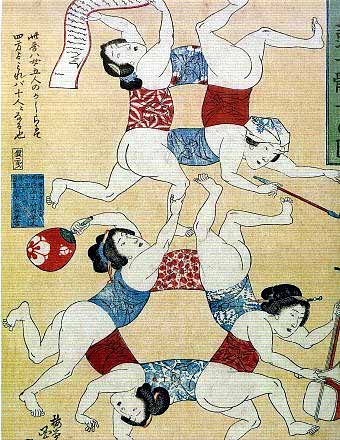
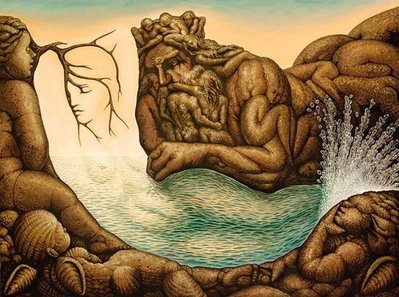
5 heads 10 bodies

Source: The Playful Eye

Suspecting correctly that I’d get something out of it, a good friend turned me on to this thoughtful essay by author Elizabeth Gilbert. It hit close to home, and provided a nice shot of Saturday morning inspiration.

UPDATE: Here it is below for those who can’t bear to look at Comic Sans on a #FFCC00 background for more than maybe three or four syllables.

Sometimes people ask me for help or suggestions about how to write, or how to get published. Keeping in mind that this is all very ephemeral and personal, I will try to explain here everything that I believe about writing. I hope it is useful. It’s all I know.

I believe that – if you are serious about a life of writing, or indeed about any creative form of expression – that you should take on this work like a holy calling. I became a writer the way other people become monks or nuns. I made a vow to writing, very young. I became Bride-of-Writing. I was writing’s most devotional handmaiden. I built my entire life around writing. I didn’t know how else to do this. I didn’t know anyone who had ever become a writer. I had no, as they say, connections. I had no clues. I just began.

I took a few writing classes when I was at NYU, but, aside from an excellent workshop taught by Helen Schulman, I found that I didn’t really want to be practicing this work in a classroom. I wasn’t convinced that a workshop full of 13 other young writers trying to find their voices was the best place for me to find my voice. So I wrote on my own, as well. I showed my work to friends and family whose opinions I trusted. I was always writing, always showing. After I graduated from NYU, I decided not to pursue an MFA in creative writing. Instead, I created my own post-graduate writing program, which entailed several years spent traveling around the country and world, taking jobs at bars and restaurants and ranches, listening to how people spoke, collecting experiences and writing constantly. My life probably looked disordered to observers (not that anyone was observing it that closely) but my travels were a very deliberate effort to learn as much as I could about life, expressly so that I could write about it.

Back around the age of 19, I had started sending my short stories out for publication. My goal was to publish something (anything, anywhere) before I died. I collected only massive piles of rejection notes for years. I cannot explain exactly why I had the confidence to be sending off my short stories at the age of 19 to, say, The New Yorker, or why it did not destroy me when I was inevitably rejected. I sort of figured I’d be rejected. But I also thought: “Hey – somebody has to write all those stories: why not me?” I didn’t love being rejected, but my expectations were low and my patience was high. (Again – the goal was to get published before death. And I was young and healthy.) It has never been easy for me to understand why people work so hard to create something beautiful, but then refuse to share it with anyone, for fear of criticism. Wasn’t that the point of the creation – to communicate something to the world? So PUT IT OUT THERE. Send your work off to editors and agents as much as possible, show it to your neighbors, plaster it on the walls of the bus stops – just don’t sit on your work and suffocate it. At least try. And when the powers-that-be send you back your manuscript (and they will), take a deep breath and try again. I often hear people say, “I’m not good enough yet to be published.” That’s quite possible. Probable, even. All I’m saying is: Let someone else decide that. Magazines, editors, agents – they all employ young people making $22,000 a year whose job it is to read through piles of manuscripts and send you back letters telling you that you aren’t good enough yet: LET THEM DO IT. Don’t pre-reject yourself. That’s their job, not yours. Your job is only to write your heart out, and let destiny take care of the rest.

As for discipline – it’s important, but sort of over-rated. The more important virtue for a writer, I believe, is self-forgiveness. Because your writing will always disappoint you. Your laziness will always disappoint you. You will make vows: “I’m going to write for an hour every day,” and then you won’t do it. You will think: “I suck, I’m such a failure. I’m washed-up.” Continuing to write after that heartache of disappointment doesn’t take only discipline, but also self-forgiveness (which comes from a place of kind and encouraging and motherly love). The other thing to realize is that all writers think they suck. When I was writing “Eat, Pray, Love”, I had just as a strong a mantra of THIS SUCKS ringing through my head as anyone does when they write anything. But I had a clarion moment of truth during the process of that book. One day, when I was agonizing over how utterly bad my writing felt, I realized: “That’s actually not my problem.” The point I realized was this – I never promised the universe that I would write brilliantly; I only promised the universe that I would write. So I put my head down and sweated through it, as per my vows.

I have a friend who’s an Italian filmmaker of great artistic sensibility. After years of struggling to get his films made, he sent an anguished letter to his hero, the brilliant (and perhaps half-insane) German filmmaker Werner Herzog. My friend complained about how difficult it is these days to be an independent filmmaker, how hard it is to find government arts grants, how the audiences have all been ruined by Hollywood and how the world has lost its taste…etc, etc. Herzog wrote back a personal letter to my friend that essentially ran along these lines: “Quit your complaining. It’s not the world’s fault that you wanted to be an artist. It’s not the world’s job to enjoy the films you make, and it’s certainly not the world’s obligation to pay for your dreams. Nobody wants to hear it. Steal a camera if you have to, but stop whining and get back to work.” I repeat those words back to myself whenever I start to feel resentful, entitled, competitive or unappreciated with regard to my writing: “It’s not the world’s fault that you want to be an artist…now get back to work.” Always, at the end of the day, the important thing is only and always that: Get back to work. This is a path for the courageous and the faithful. You must find another reason to work, other than the desire for success or recognition. It must come from another place.

Here’s another thing to consider. If you always wanted to write, and now you are A Certain Age, and you never got around to it, and you think it’s too late…do please think again. I watched Julia Glass win the National Book Award for her first novel, “The Three Junes”, which she began writing in her late 30’s. I listened to her give her moving acceptance speech, in which she told how she used to lie awake at night, tormented as she worked on her book, asking herself, “Who do you think you are, trying to write a first novel at your age?” But she wrote it. And as she held up her National Book Award, she said, “This is for all the late-bloomers in the world.” Writing is not like dancing or modeling; it’s not something where – if you missed it by age 19 – you’re finished. It’s never too late. Your writing will only get better as you get older and wiser. If you write something beautiful and important, and the right person somehow discovers it, they will clear room for you on the bookshelves of the world – at any age. At least try.

There are heaps of books out there on How To Get Published. Often people find the information in these books contradictory. My feeling is — of COURSE the information is contradictory. Because, frankly, nobody knows anything. Nobody can tell you how to succeed at writing (even if they write a book called “How To Succeed At Writing”) because there is no WAY; there are, instead, many ways. Everyone I know who managed to become a writer did it differently – sometimes radically differently. Try all the ways, I guess. Becoming a published writer is sort of like trying to find a cheap apartment in New York City: it’s impossible. And yet…every single day, somebody manages to find a cheap apartment in New York City. I can’t tell you how to do it. I’m still not even entirely sure how I did it. I can only tell you – through my own example – that it can be done. I once found a cheap apartment in Manhattan. And I also became a writer.

In the end, I love this work. I have always loved this work. My suggestion is that you start with the love and then work very hard and try to let go of the results. Cast out your will, and then cut the line. Please try, also, not to go totally freaking insane in the process. Insanity is a very tempting path for artists, but we don’t need any more of that in the world at the moment, so please resist your call to insanity. We need more creation, not more destruction. We need our artists more than ever, and we need them to be stable, steadfast, honorable and brave – they are our soldiers, our hope. If you decide to write, then you must do it, as Balzac said, “like a miner buried under a fallen roof.” Become a knight, a force of diligence and faith. I don’t know how else to do it except that way. As the great poet Jack Gilbert said once to young writer, when she asked him for advice about her own poems: “Do you have the courage to bring forth this work? The treasures that are hidden inside you are hoping you will say YES.”

Good luck.

RELATED: Is Creativity Divinely Inspired?

The Punctuation Therapy Group
by Jace Daniel (b. 1969)

Once upon a time there was a comma. He had a way with words, and always made it a priority to communicate himself well. He sincerely cared about others, and was dismayed at how badly individuals related to each other. Like all commas, he had only the best of intentions.

One day, after seeing how poorly others communicated without him, he decided to create a therapy group. He put an ad in the paper:

PUNCTUATION THERAPY GROUP
All types welcome
Thursdays, 8PM, Keystroke Coffee House

The first Thursday arrived. Getting to the coffee house an hour early, the comma rounded up all available chairs, stools, and some cushions, creating a large circle in the room.

Before long, a question mark entered the coffee house holding the newspaper ad. “Is this where the Punctuation Therapy Group meets?” the question mark asked.

“Well, it sure is,” replied the comma. “Tonight, next week, and hopefully forever.”

Other individuals of different shapes and sizes began pouring into the coffee house. Ordering their beverages, the respondents each took an available spot in the therapy circle.

The comma was amazed at the turn out. Gee, this is great, he thought.

The coffee house was soon packed. Looking at his watch and noticing it was 7:59 PM, the comma stood up in the middle of the circle to make an announcement.

“First of all, I’d like to thank you all for coming,” he said. “After many years, I’ve felt a calling to create a support group like this one from the bottom of my heart, the top of my head, and the core of my soul. My watch shows that we still have a minute to go before eight o-clock, but I suppose we could start early.”

A period sitting on a lounge chair spoke up. “I’ve got eight on the dot.”

“Okay, sure, I suppose we’re good to go then,” said the comma. “Before we begin, I figure it’d be a good idea to go around the room and introduce ourselves. We’ll start with me, and go counter-clockwise.”

The group went silent, giving the comma the floor.

“I’m a comma, and have always been,” said the comma. “For a long time, since, say, I was about, oh, this tall or so,” the comma held his hand, palm down over the floor, “I’ve noticed that individuals, large and small, old and young, wide and thin, tall and short, can often have difficulties being clear, concise, and to the point. The purpose of this therapy group, or meeting, if you will, is to provide support, encouragement, and fellowship for all of us through the sharing of our experiences, fears, challenges, and concerns.”

The group nodded in agreement.

The comma concluded. “So, that said, I’d like to thank you all for coming, and, for what it’s worth, please feel free to contact me personally after the meeting in person, via email, or on my cell phone. My business cards, an entire stack, are there by the door next to the sugar, napkins, straws, and cream.”

The group clapped with approval.

“So, I suppose now would be a good time to meet the individual to my right, who’s been sitting there patiently.”

The individual to the comma’s right took the floor. “Thanks. This is great. I’m a period. Nice to meet you all.”

The comma smiled. “Well, thanks for coming. Your self introduction was short, brief, and abbreviated. A real whirlwind of an entrance, as it were. Is there anything else you’d like to convey, demonstrate, or otherwise tell us?”

“Not right now.” said the period.

“Okay then, we’ll move on,” said the comma. “Young lady, you, there, lying on the couch, please tell us a little about yourself.”

“What-you-see-is-what-you-get,” she said matter-of-factly. “I’m a hyphen, tried-and-true. While other individuals may be more of the plug-and-play type, I’m more of a pedal-to-the-metal diamond-in-the-rough.”

“That, my friend, is fantastic,” said the comma. “What brings you here, if I may ask?”

“It’s my over-the-top boyfriend,” said the hyphen. “He’s an apostrophe.”

“And has he harmed you, or hurt you, or abused you in any way, whether physically or verbally?” asked the comma.

The hyphen sat up like a jack-in-the-box to answer.

“It’s just that he’s so possessive. I mean, really possessive. Honest-to-goodness. We’re talking no-holds-barred take-no-prisoners balls-to-the-wall possessive.”

“Wow!” exclaimed a tall figure standing in the corner. “I know exactly what you mean! Holy cow!”

The comma mediated patiently, “Well, I know we were going to be doing this in order, but I suppose, when it’s all said and done, we could jump around from here, to there, and back again.”

The comma turned to the tall figure in the corner. “Sir, what brings you here?”

“I’m an exclamation point!”, he exclaimed. “I’ve never seen anything like this! This is terrific! Go on! Please! Somebody! I don’t have anything more to say! I’m just watching! And waiting for my latte!”

“Well, thank you very much for coming,” said the comma. “We can all learn from each other, and grow, and evolve. What’s important in this life, and in any other, is to make our mark.”

“What’s that supposed to mean?” asked the question mark.

“It depends,” said the asterisk.

“But…” began the ellipsis.

“It’s like this: utterly genius,” interrupted the colon.

“That’s profound; you’re really on to something with that one,” added the semicolon.

“That’s a perfect example of wisdom/experience/insight,” offered the slash.

“That is of the utmost importance,” said the underscore.

“It sure is!” exclaimed the exclamation point.

The parenthesis and his twin brother stated in unison, “What a truthful (and honest) statement that was. It applies to all of us. (Or most of us, anyway.)”

A backslash sat there quietly on his laptop, preoccupied with thought, partitioning his C drive. His girlfriend, the tilde, sipped her cappuccino.

Two married couples sat there quietly, nodding. The comma noticed them.

“And you four, the two couples in the corner there,” said the comma. “What’s your story, and the reason you’re here?”

The left-most individual of the four answered, “We’re here because, quite frankly, we actually don’t really know what to do with ourselves.”

The comma smiled, “Well, that’s why we’re here, isn’t it? Talk to us, level with us, and we’ll do our best to get this sorted out, under control, and squared away.”

The left-most individual of the four continued, “We appreciate that, but I’m not sure if you can help. You see, I’m here with my wife. Sitting next to us is my cousin and his wife.”

The crowd smiled with warm hellos.

The left-most individual of the four continued, “We have no clear purpose. I mean, the only time we ever come in handy for anything is in really special situations. We’re not the types of individuals that are useful on an everyday basis.”

“That’s okay, and it’s something we can work on,” said the comma. “What, if I may ask, are you?”

The left-most individual of the four concluded, “My wife and I are the Brackets.”

The right-most individual of the four added, “And we’re the Curly Braces.”
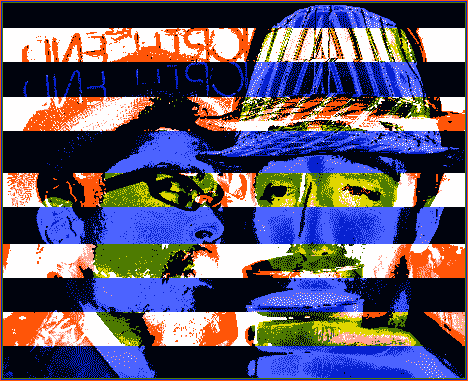
jace naylor guinnes north end

“Brothers, Fedoras, and Guinness”
Two dudes in fedoras drinking Guinness, a camera, and Photoshop
Hermosa Beach, 2007

“Man is free at the moment he wishes to be.”
— Voltaire

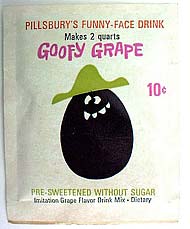
funny faceIn 1965, our country wasn’t quite as culturally sensitive as it is today. That year, Pillsbury tried to cut into the profits of Kool-Aid with their own pre-sweetened drink mix, Funny-Face.
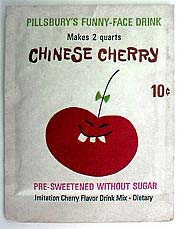
Each package of Funny-Face was to be added to two quarts of cold water, no sugar needed. Funny Face was potently sweetened with cyclamates, and the package weighed little more than a similar package of unsweetened Kool-Aid.

I’ve got memories of this stuff way in the back of my head. I probably caught the tail-end of it in the early seventies. If I could get Mom to pick up Funny-Face and a bottle of bubbles during our trip to the store, it was a good afternoon.

The original flavors included Goofy Grape, Chinese Cherry, Loud Mouth Lime, Lefty Lemon, Injun Orange, Freckle Faced Strawberry, and Rootin’ Tootin’ Raspberry.

There were pictures of the character on the front of the packages. The characters were eventually deemed demeaning to their related ethnic groups, and a re-naming spree kicked in. Chinese Cherry became Choo Choo Cherry and Injun Orange became a portly Jolly Olly Orange. Lefty Lemon and Loud Mouth Lime were combined to make Lefty Lemon-Lime.

funny faceSo let’s see if we can identify who was being offended with these playful powdered drink mascots.
Goofy Grape = goofy people
Chinese Cherry = Chinese people
Loud Mouth Lime = loud people
Lefty Lemon = left-handed people
Injun Orange = Native Americans
Freckle Faced Strawberry = people with freckles
Jolly Olly Orange = fat people
Rootin’ Tootin’ Raspberry = cowboys

How dare they???

Anyway, banning of cyclamates changed the Funny-Face formula. First was to sell it unsweetened, but people complained that they’d rather buy Kool-Aid. By the time Pillsbury added sugar to the mix, Kool-Aid had already regained the marginal lost market. (“Hey, Kool-Aid!”)

Sources: Gone Things and personal recollections

mermaid waterfall illusion

Seeing the mermaid, Neptune, and a kid or two are easy enough. Now find the dozens of other hidden people.

“Self-consciousness is the enemy of all art, be it acting, writing, painting, or living itself, which is the greatest art of all.”
— Ray Bradbury